Reflections
I Almost Said No. She Won the World's Most Prestigious Cheer Title — And More. Here's What I Learned.
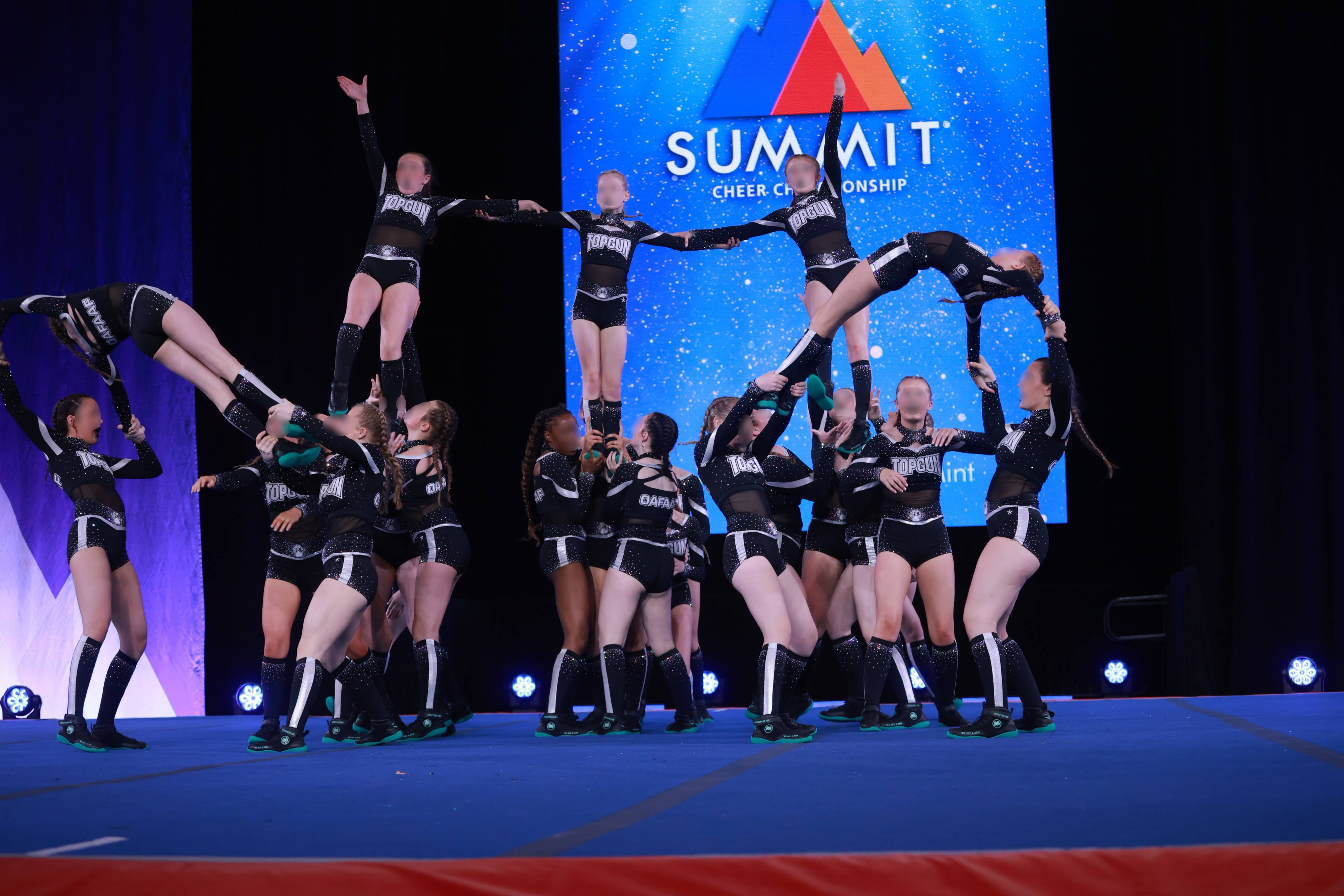
Seven leadership lessons from an undefeated season — on teams, trust, pressure, and legacy.
I never expected cheerleading to teach me some of the most important leadership lessons of my career.
This year, I had a front-row seat watching my daughter compete with Mint — a U16 team at Top Gun All Stars UK. Top Gun UK have been featured on ITV News as the most successful cheerleading programme outside of America. Their team Shadow are seven-time Summit World Champions and the first team in cheerleading history to achieve a perfect score of 100 — a milestone never reached before in the sport's history.
Mint's record is extraordinary in its own right. Four-time Summit World Champions. NCA and UCA Champions. Described by their own club as "one of the only teams to ever outscore Shadow." Both teams have won Summit every single time they have competed there. This season, they went undefeated across every single competition they entered — including the Summit Championships in Orlando, Florida: a four-day event drawing thousands of athletes from across the globe and the most prestigious competition in All Star cheerleading.
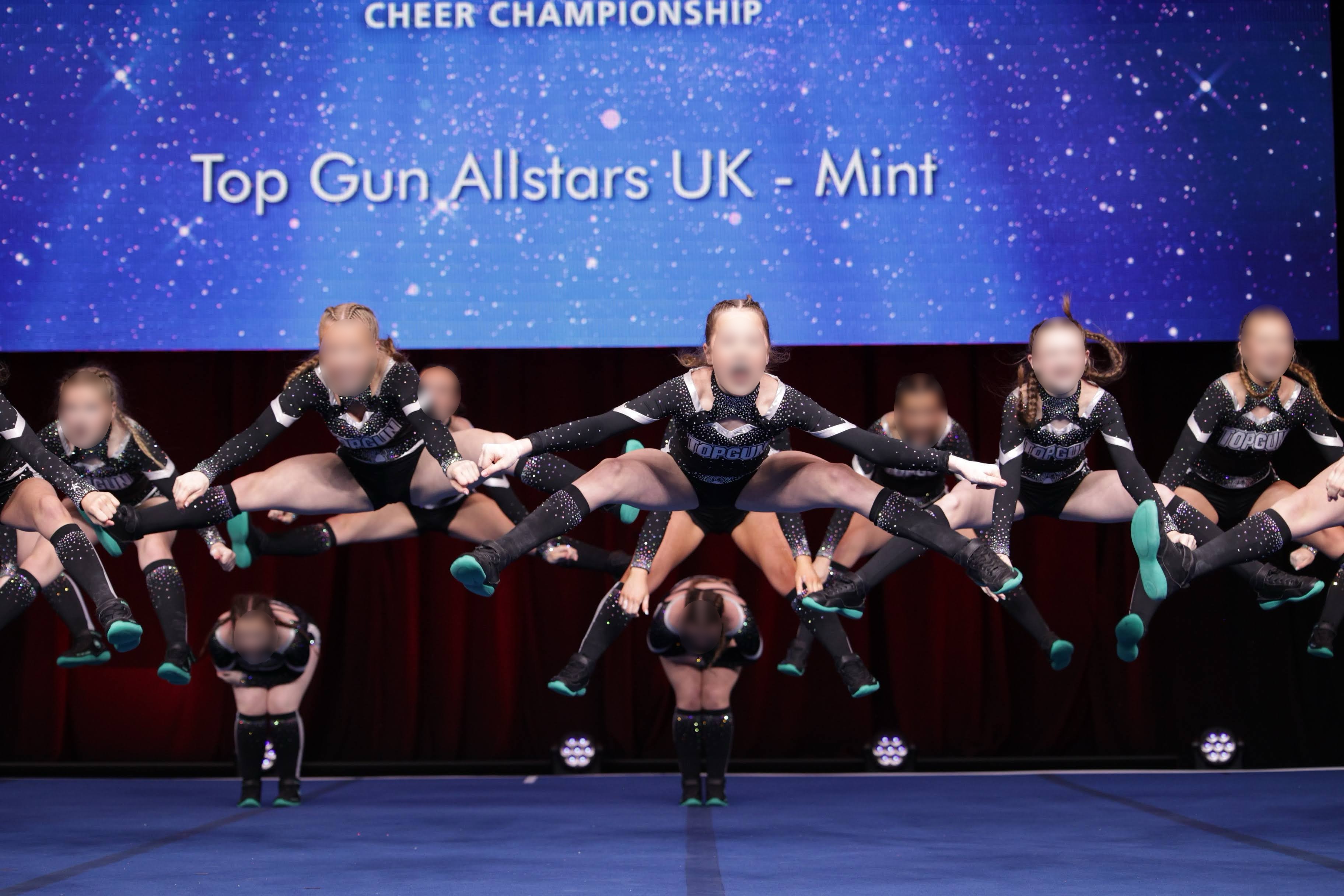
Before you picture sideline pompoms — let me correct that image. All Star cheerleading is one of the most physically demanding team sports in the world. Athletes are judged simultaneously on technical execution, difficulty, creativity, and showmanship — precision and artistry, process and performance, all at once, in two and a half minutes. Scores are calculated to fractions of a point, with deductions applied for every wobble, every imprecision, every fraction of a second out of sync. Nothing is rounded. Nothing is overlooked. There is no hiding. There is no second take.
I noticed something at a recent competition. When a Top Gun team walks out, the auditorium goes still. No movement. No noise. Coaches and athletes from other teams put down what they are doing and come to watch. It is an unspoken recognition — a collective pause in the presence of excellence. You cannot manufacture that response. You can only earn it.
As a professional business coach, I couldn't stop taking mental notes.
James Kerr's Legacy — a book about the All Blacks, the most successful sporting franchise in history — asks a deceptively simple question: How do you achieve world-class standards, day after day, week after week, year after year?
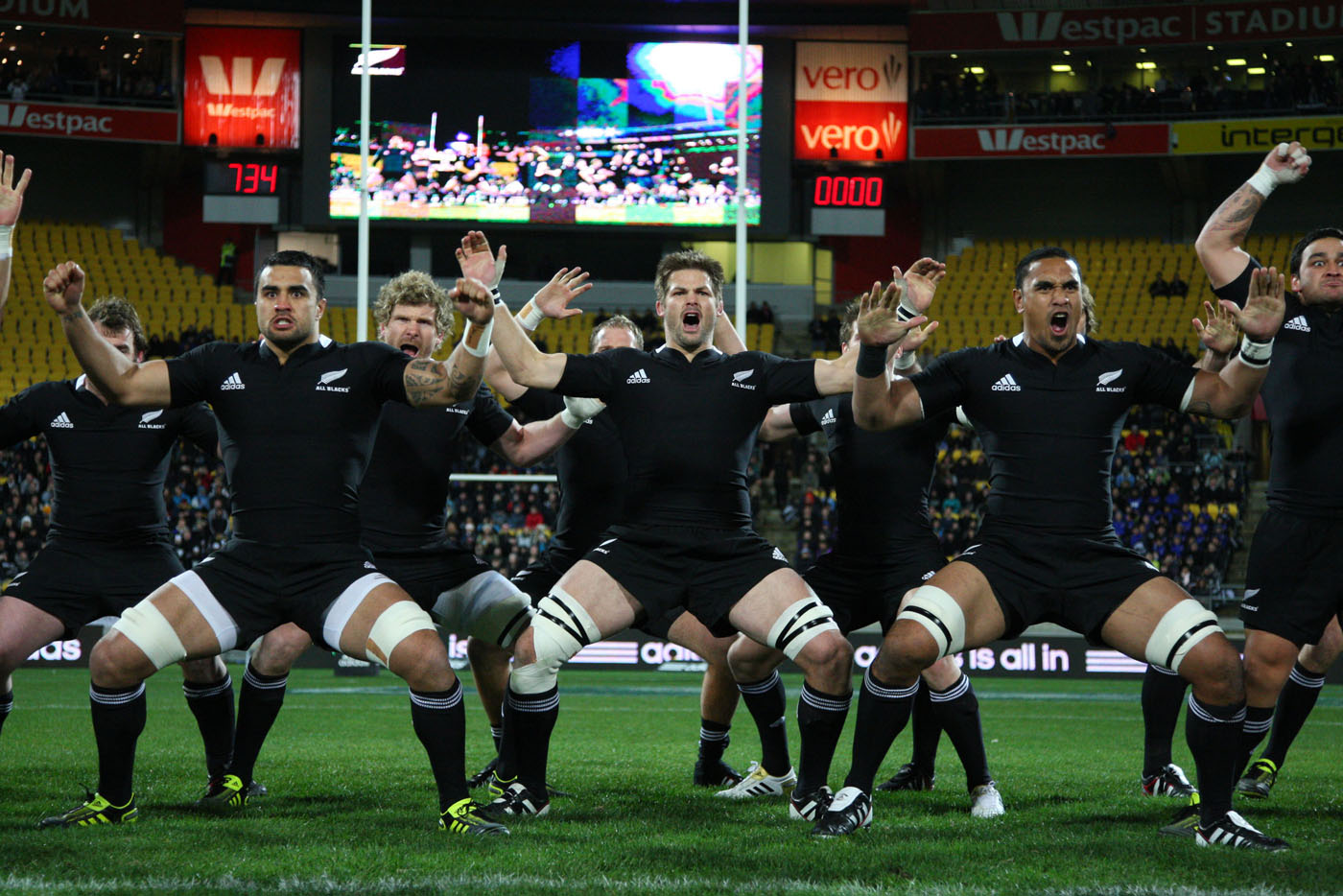
Watching Mint this season, I found the answer playing out right in front of me.
1. Champions Sweep the Sheds
The All Blacks have a rule: no matter how big the win, the players clean their own locker room after the game. No one is too important to do the small things. Humility is not weakness. It is the foundation of sustained excellence.
What you don't see on the competition floor is the thousands of hours of repetitive, unglamorous training behind every two-and-a-half-minute performance. The trophy is the visible part. The discipline — the daily, quiet, unspectacular work — is the real story.
Psychologist Anders Ericsson spent decades studying elite performers and reached an uncomfortable conclusion for anyone who prefers to believe in natural talent: what separates the best is not innate ability. It is deliberate practice — structured, effortful repetition sustained over years. Watch an elite cheer team train and you are watching that theory made flesh.
"The trophy is the visible part. The discipline is the real story."
The teams that stay on top are the ones who never start believing their own press. Titles change. Standards don't. What you do on the ordinary days determines what's possible on the extraordinary ones.
2. The Work Doesn't Stop When Practice Ends
Many people don't realise that elite competitive cheerleading extends well beyond the gym. Athletes complete training homework several times a week — individual work, done privately, that feeds directly into collective performance.
The moment they come off the floor — the team gathers to review their own performance. Not waiting for a coach's verdict. Doing it themselves.
This is peer accountability in its purest form — and it maps precisely onto what Patrick Lencioni identified in The Five Dysfunctions of a Team as one of the hardest things to build: a culture where team members hold each other to the standard, not because a manager is watching, but because they care about the outcome and about each other. Harvard researcher J. Richard Hackman found the same thing in decades of team research: mutual accountability — horizontal, not vertical — is one of the defining characteristics of truly high-performing teams.
Albert Bandura's Social Learning Theory adds another layer: people learn and self-regulate most effectively when they can observe peers, not just receive instruction from above.
"The most high-performing teams hold each other to the standard — not because they have to, but because they care too much not to."
Most accountability flows downward — dashboards for managers, reviews from above. When a team begins to hold itself to its own standard — not because it is enforced, but because members genuinely care about each other and the work — something changes. Not enforced. Shared. There is a profound difference between those two things.
3. Leaders Create Leaders — There Are No Titles Here
One of the core principles in Legacy is that leadership is not a position — it is a responsibility distributed across the entire team. The All Blacks don't rely on one captain to carry the culture. Every player owns it in their moment.
Captain David Marquet, in Turn the Ship Around, describes the same shift on board a US nuclear submarine. His insight was that traditional leadership — where authority sits at the top and information travels upward — fails in complex, high-stakes environments. His alternative: move authority to where the information is. Stop giving orders. Create thinkers and decision-makers at every level. He called it the leader-leader model, and it transformed one of the worst-ranked submarines in the US Navy into one of the best.
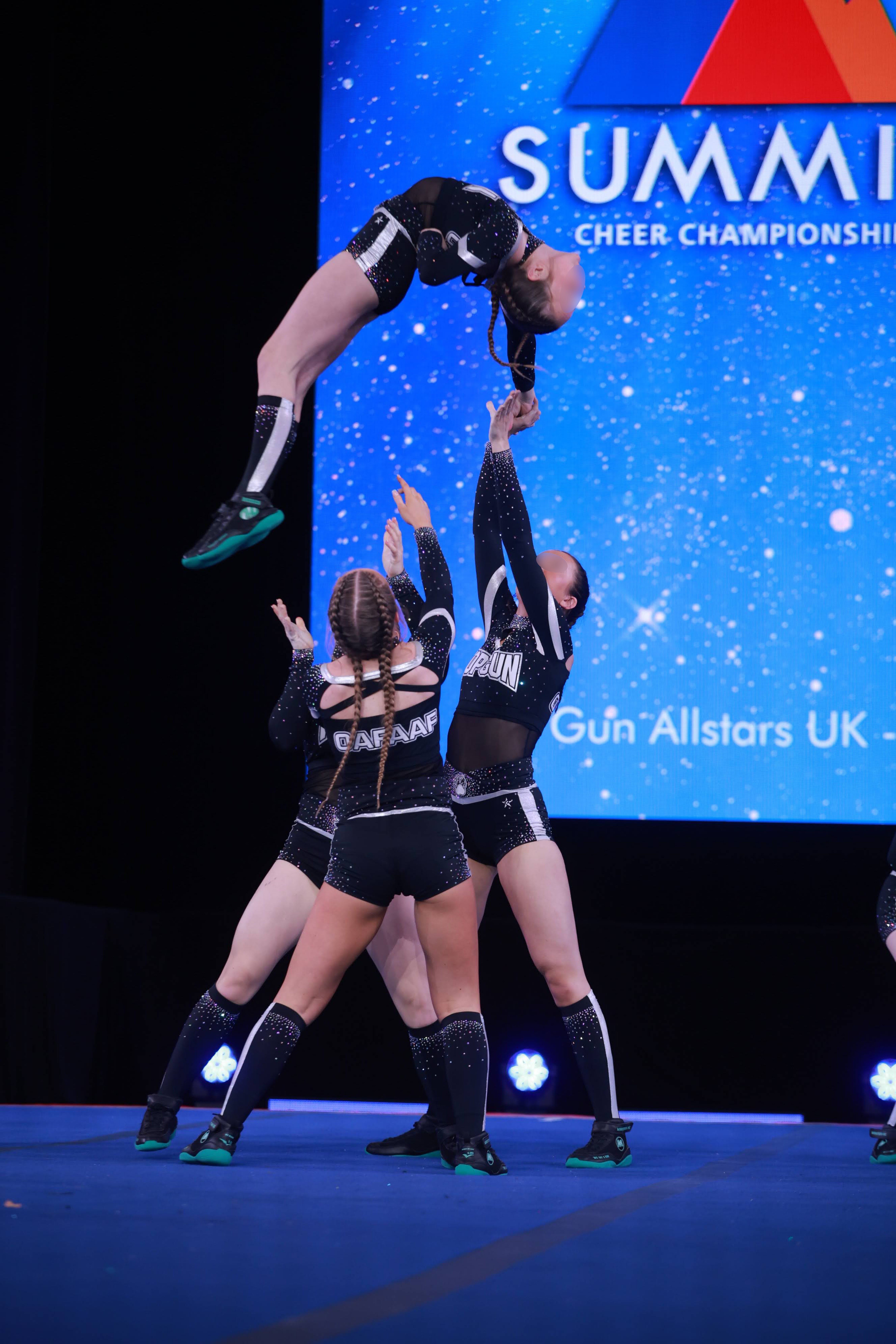
A cheer routine makes this principle visible in the most physical way imaginable. There is no CEO mid-performance. In stunting, one athlete is thrown into the air by her teammates — sometimes at heights of fifteen feet or more, mid-twist, mid-spin, in synchrony with other pairs doing the same thing simultaneously. If trust breaks down for a single second, someone gets hurt. Every person leads in their moment. When someone is in the air, there is no hierarchy — only responsibility.
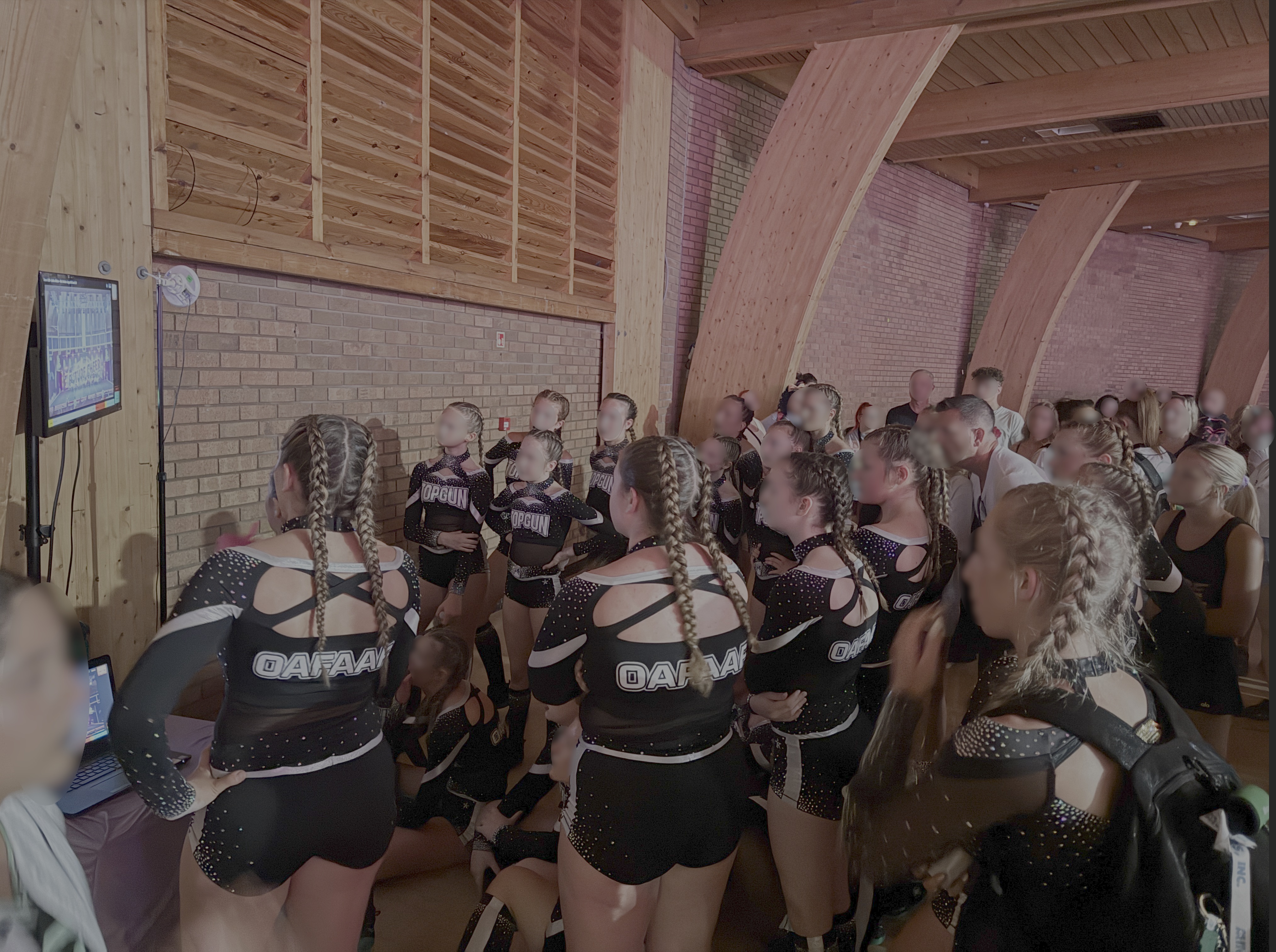
That is not a metaphor for workplace dynamics. That is the actual, physical consequence of a team that isn't truly one.
"If your culture depends on one leader to hold it together, it isn't a culture yet."
The goal is to build an environment where leadership is so embedded that it survives the room — and the leader. Not a chain of command. A web of ownership. Marquet's question is worth borrowing: are you creating followers, or are you creating thinkers?
4. Whanau — The Team Is the Family
The All Blacks use the Māori concept of whanau — family — to describe what binds their squad beyond shared goals. Top Gun UK expresses the same idea plainly: their athletes learn "to trust each other and build confidence both on and off the cheer mat."
In 1999, Harvard Business School professor Amy Edmondson published landmark research showing that the highest-performing teams reported more errors, not fewer — not because they were worse, but because they felt safe enough to admit them. Psychological safety, she found, is what allows teams to learn at the speed performance demands. Without it, people protect themselves instead of the mission.
Deci and Ryan's Self-Determination Theory identifies relatedness — belonging to something that genuinely holds you — as one of the three core human needs. Elite team sport delivers it in ways almost nothing else can.
"Psychological safety is built not in offsite workshops, but in thousands of small moments of showing up for each other."
Psychological safety is not a perk or an HR initiative. It is a structural condition that matters enormously — and it is built in the thousands of small moments of showing up for each other, not in a team away-day.
5. Sustained Excellence Is a System, Not a Moment
One great performance is luck. Going undefeated across an entire season is culture.
Mint compete in a sport judged simultaneously on technical execution and creative expression — precision and artistry, scored together. In many organisations, process and creativity are treated as opposing forces. At this level of cheerleading, they are inseparable. Both must be excellent. Always. That demands a culture with no floor and no ceiling.
Edgar Schein defined culture as the way a group actually does things — the habits and expectations that operate whether or not anyone is enforcing them. Culture is not what you say you value. It is what happens on a hard Tuesday in November when no one is paying attention.
"Culture is not what you say you value. It is what you actually do when no one is watching."
Build the system. Protect the standards. And if you want to know what your culture really is — don't look at your values poster. Look at what your team does when the pressure is quiet and the spotlight is off.
6. Pressure Sharpens — It Doesn't Just Crush
My daughter has been doing cheer for years, across multiple clubs. It is not a hobby she picked up — it is something she has built herself around. But with her GCSEs approaching, we made a decision last year: this was going to be her last season. Studies had to come first, and we felt the time had come to draw the line.
She had other ideas.
When she asked to continue, my wife and I didn't simply say yes — but we didn't simply say no either. What followed was one of those conversations that asked more of us as parents than we expected. We had to set aside our assumptions, our fears, and our ready-made conclusions, and genuinely explore things together — with her, and with each other — with as open a heart and mind as we could manage. That process taught me a great deal too, but that is another article.
What we landed on was this: school first, always. A strict study plan, non-negotiable. Her life would be school, cheer, and homework — in that order, with little room for anything else. We were not without doubt. But we said yes.
She committed without hesitation.
What followed was one of the most remarkable things I have witnessed as a parent. This was not a year of simply managing two things at once. Twice a week she left school early to attend training — with the school's full support and understanding of the commitment she was honouring. Months before her GCSEs, she missed mock exams — the critical dry run that most students treat as near-sacred — to fly to Atlanta, USA, to compete in an international competition. She went. She competed. She came home and sat her GCSEs. She delivered on all of it.
The research is consistent on this. Students who compete in sport develop stronger time management, greater self-discipline, and better academic results — not despite the pressure, but because of it. Constraint creates structure. Angela Duckworth's work on grit found it a better predictor of success than IQ or talent. Mihaly Csikszentmihalyi's research on flow tells us that peak performance doesn't emerge from easy conditions — it emerges at the edge of capability, where challenge and skill are perfectly matched. Elite competitive cheer delivers that edge every single session.
My daughter didn't just survive the year. She thrived. And recently she told me something that stopped me in my tracks:
"Cheer gave me my sanity this year."
She was right, and the science agrees. A longitudinal study published in the Journal of Adolescent Health followed 853 adolescents through five years of secondary school and into early adulthood, finding that those who played sport showed significantly lower rates of depression and stress — not just during their playing years, but well beyond them. The mechanism isn't exercise. It is belonging.
And research on women in leadership adds a striking footnote: a survey of 821 female C-suite executives by EY and espnW found that 94% had played sport at some point in their lives. The qualities elite team sport builds — resilience, accountability, distributed leadership, emotional intelligence — are precisely the qualities organisations spend decades trying to develop. The young women of Mint are not just winning competitions. They are becoming the leaders that business will be lucky to have.
We often talk about protecting our people from pressure. Sometimes, the more powerful thing is to trust them with it — give them the conditions to succeed, make the expectations clear, and then get out of their way. You might be surprised what they commit to.
7. Be a Good Ancestor
Perhaps the most powerful idea in Legacy is this: leave the jersey in a better place than you found it. Plant trees you'll never see. Build something that outlasts you.
In All Star cheerleading, this is not a metaphor. It is the structure of the sport itself.
Each season, teams compete not just for trophies but for bids — the right to attend the following year's international championships, such as Summit. A strong season earns your spot. Some bids are paid, meaning a portion of the competition costs is covered — a tangible, financial reward for excellence that flows forward. Win well enough this year, and you make next year more possible for the team that follows you.
And here is the thing about Mint: by the time Summit arrives, many of the girls who competed will have aged out. The U16 category exists only up to age 16. The team that wins the bid, secures the place, and sets the standard will largely not be the team that benefits from it. Next year's Mint will be a different group of athletes — younger, newer, inheriting what this year's team built.
They win for each other. And then they win for people they may never compete alongside.
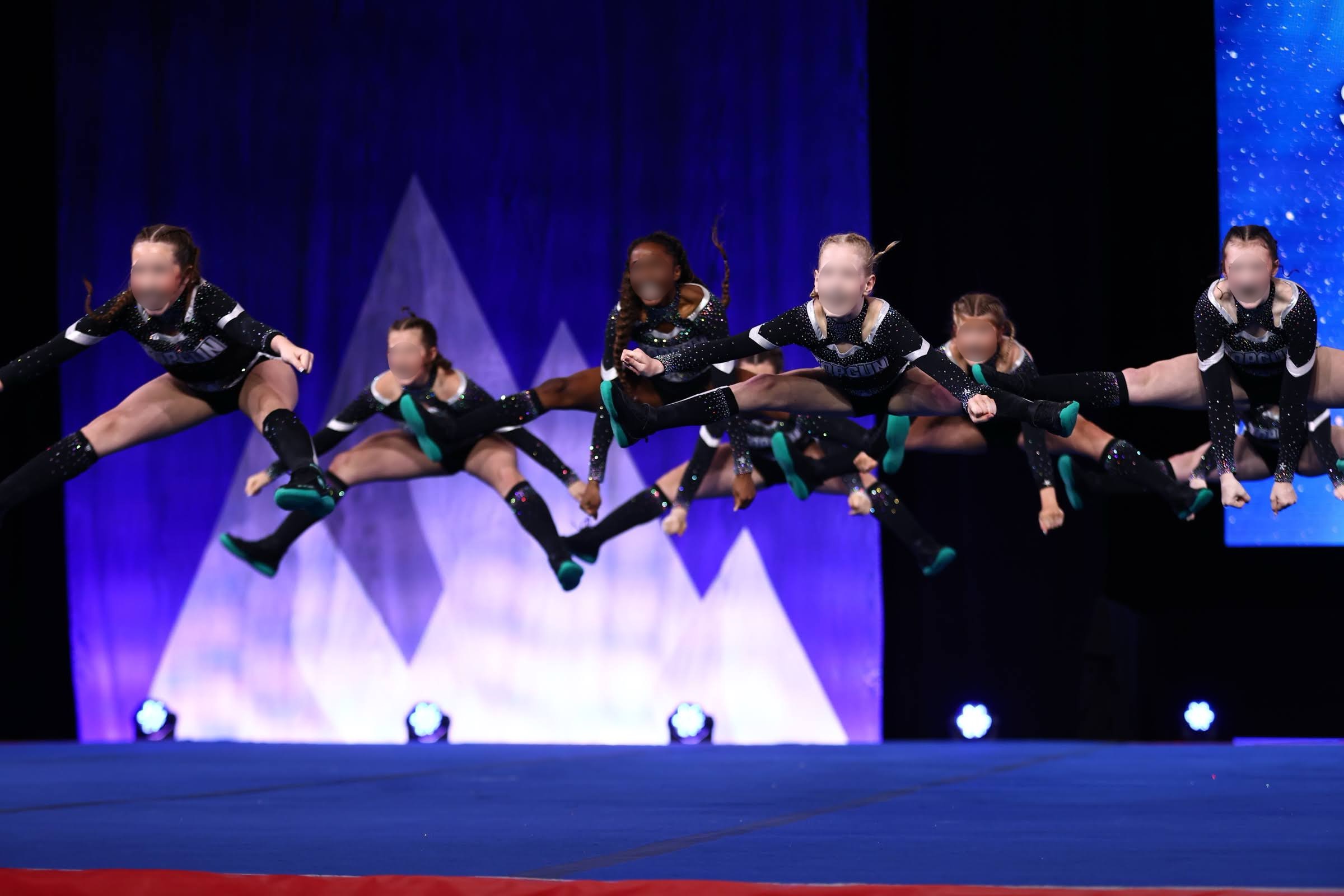
Top Gun UK runs 16 competitive teams, from the youngest beginners all the way up to their elite Worlds squad. When the youngest athletes watch Mint warm up, they are watching who they might become. That is a form of leadership no organisational chart captures.
The coaches — Brienne Thompson-Fields and Andrew Wicks — have built something that goes well beyond any single season. What they have created is a culture that produces champions year after year, across multiple teams, at every age group. That is institution-building. That is what the best leaders do: they don't just win — they build the conditions that make winning possible long after they've left the room.
"The best leaders don't just perform. They build the conditions that make performance possible for the people who come after them."
Legacy isn't a title or a plaque. It is the culture you leave behind — the standards you set, the people you developed, and the organisation that is stronger for the fact that you were there. It is worth pausing to ask not only "what am I achieving?" but "what am I making possible for the people who come next?"

A Final Thought
My daughter and her Mint teammates went undefeated on the world stage this year. They didn't set out to teach anyone anything. They set out to win — and they did, every single time. But in watching them, I was schooled.
Discipline. Peer accountability. Distributed leadership. Psychological safety. Sustained excellence. Resilience. Legacy.
Maybe we've been looking for these lessons in the wrong places.
If you haven't read James Kerr's Legacy yet, move it to the top of your list.
And to my daughter and her incredible teammates: the fundamentals never go out of style. And sometimes, the people who understand them best haven't yet turned twenty.
Key research referenced
- Ericsson, K.A., Krampe, R.T. & Tesch-Römer, C. (1993) — "The Role of Deliberate Practice in the Acquisition of Expert Performance," Psychological Review, 100(3), 363–406
- Bandura, A. (1977) — Social Learning Theory. Englewood Cliffs, NJ: Prentice Hall
- Lencioni, P. (2002) — The Five Dysfunctions of a Team. San Francisco: Jossey-Bass
- Marquet, L.D. (2013) — Turn the Ship Around! New York: Portfolio/Penguin
- Hackman, J.R. & Wageman, R. (2005) — "A Theory of Team Coaching," Academy of Management Review, 30(2), 269–287
- Edmondson, A.C. (1999) — "Psychological Safety and Learning Behavior in Work Teams," Administrative Science Quarterly, 44(2), 350–383
- Deci, E.L. & Ryan, R.M. (1985) — Intrinsic Motivation and Self-Determination in Human Behavior. New York: Plenum
- Duckworth, A.L., Peterson, C., Matthews, M.D. & Kelly, D.R. (2007) — "Grit: Perseverance and Passion for Long-Term Goals," Journal of Personality and Social Psychology, 92(6), 1087–1101
- Csikszentmihalyi, M. (1990) — Flow: The Psychology of Optimal Experience. New York: Harper & Row
- Schein, E.H. (1985) — Organizational Culture and Leadership. San Francisco: Jossey-Bass
- Jewett, R. et al. (2014) — "School Sport Participation During Adolescence and Mental Health in Early Adulthood," Journal of Adolescent Health, 55(5), 640–644
- EY & espnW (2014) — Making the Connection: Women, Sport and Leadership. Ernst & Young LLP
- Kerr, J. (2013) — Legacy. London: Constable